SECTION 01
3 Structural Reasons Why Indie Dev Monetization Fails
The most common wall indie developers hit is the reality that what they built doesn't sell. The product works technically. But after launch, users don't come—and even when they do, they don't pay.
I've personally built over 40 services, and the vast majority stalled at the monetization stage. After experiencing more than 30 failures, what finally became clear was that the root cause wasn't technical skill—it was the design decisions made before development even began.
The structure of monetization failure generally comes down to three things.
- Deciding "who this solves what for" based solely on your own perspective
- Burning out by the time development is done, leaving no energy for acquisition and sales
- As AI has accelerated development speed, the differentiator has shifted from "being able to build" to "designing something that sells"
These three aren't independent problems—they're interconnected. Weak target validation means unclear messaging. Unclear messaging means struggling with acquisition. No acquisition means no revenue.
The cost of skipping design decisions before development comes back all at once after launch.
SECTION 02
Starting From "What I Want" Is Right—But It's Not Enough
A common pattern in indie development is building exactly what you want. You create a tool that solves something you find inconvenient. This starting point is actually quite good.
The reason is that problems you genuinely struggle with have high resolution. What situations trigger the frustration, what's missing from existing tools, what kind of solution would satisfy you—as the person experiencing it, you can articulate all of this without ambiguity. This level of clarity can't be achieved through market research alone.
However, you need to pause here. The key point is that "I want this" doesn't necessarily mean "others will pay for it."
Even if it's a pressing problem for you, how many other people share the same issue? And even if they exist, do you have a way to reach them? If you skip this step of estimating "market size" and jump straight into development, you'll end up with a tool that only you use.
What you need to verify are questions like these.
- Can you find people with the same problem around you or online?
- How are those people currently tolerating the problem—are there alternative solutions?
- Is the urgency strong enough that people besides you would pay to solve it?
Using your own needs as a starting point is actually a strength. But simply adding the lens of "how many people might share this problem" dramatically changes your odds of success.
In my own experience, every service that worked well started from my own problem but was only built after confirming that a meaningful number of people shared the same pain. Conversely, every service that failed was one where I used only my own desire as justification and started building without verifying the market existed.
SECTION 03
Burning Out After Development Kills Acquisition and Sales
For indie developers, there's a strong tendency for launch to feel like the finish line. The sense of achievement from completing and shipping a product is so powerful that energy runs out at that point. But the real competition starts after launch.
Even after you ship, users almost never come on their own. On app stores, your search ranking sits at the bottom. For web apps, organic search traffic starts near zero. Acquisition requires time and effort that's completely separate from development.
This is where many indie developers fall into the following loop.
- Users don't come → You assume adding features will attract them → You spend more time on development
- Spending time on development → No bandwidth for acquisition → Users still don't come
- You burn out and abandon the product entirely
To avoid this loop, it's critical to plan the resource split between development and acquisition from the very beginning. If you schedule assuming all your time goes to development, you'll have nothing left after launch.
The ideal approach is to start planting acquisition seeds while still in the development phase. Sharing your development process on social media and building touchpoints with potential users before launch means you won't start from zero on release day.
SECTION 04
In the Age of AI, "Being Able to Build" Is No Longer a Competitive Advantage
Since integrating AI into the development workflow, the speed of building products has increased dramatically. I personally feel like a revolution is happening. What used to take months can now take shape in a fraction of the time.
But this change has simultaneously reduced the scarcity value of "being able to build." If anyone can build fast, the ability to build itself isn't a differentiator. As a result, the battleground for indie development has shifted to the design side: "what to build," "how to deliver it," and "how to monetize it."
This is both good news and a harsh reality for indie developers.
- The upside: Lower development costs mean you can run validation cycles faster
- The tough part: Competitors can build at the same speed, so features alone won't win
- The fundamental shift: Market understanding and design thinking now determine success more than technical ability
That's precisely why design decisions before development matter more than ever. In an era where you can build fast, getting the "what to build" decision wrong just means you fail faster. You cannot skip the step of thoroughly thinking through "is this a design that will sell" before you start building.
SECTION 05
Design Decision 1: Reverse-Engineer "Who Will Pay" From Your Career and Domain Knowledge
Among the five design decisions, the first and most important is target design. Instead of starting with "what to build," you work backward from "who will pay." Get this order wrong, and every subsequent decision goes off track.
The most reliable way to find your target is to dig up problems from your own career and work experience. Think back to the industry or role you were in: what tasks were inconvenient but tolerated? What problems couldn't existing tools fully solve?
This approach works for the following reasons.
- You were an "insider" in that industry, so your understanding of the problem is deep
- You can validate needs through acquaintances still in the same industry
- Because you know pain points invisible from outside, you can target areas with fewer competitors
The key here is to start from your own experience while always including a step to verify "how many people share this problem." Is it just your issue, or is there a reachable audience? Having a high-resolution understanding of a problem and that problem being a viable market are two different things.
Conversely, if you enter a field you have no connection to just because it "seems trendy," you end up building with a shallow understanding of the problem. Since resources in indie development are limited, you should leverage your unique domain knowledge as your greatest weapon.
Some people might feel "I don't have any domain where my knowledge is an advantage." But every career has industry-specific inefficiencies and manual processes. Start by articulating those, then verify whether anyone would pay to have them solved.
SECTION 06
Design Decision 2: How to Choose Between Ads, One-Time Purchase, Subscription, and Hybrid Models
The optimal revenue model varies entirely depending on your product's nature and target audience. There's no point debating whether ads, one-time purchase, or subscription is universally "correct"—what matters is having a framework to choose the right fit for your product.
As a rough guide, thinking in terms of usage frequency and problem urgency helps you organize the options. Products used daily and repeatedly suit subscriptions, while products that solve a one-time task suit one-time purchases.
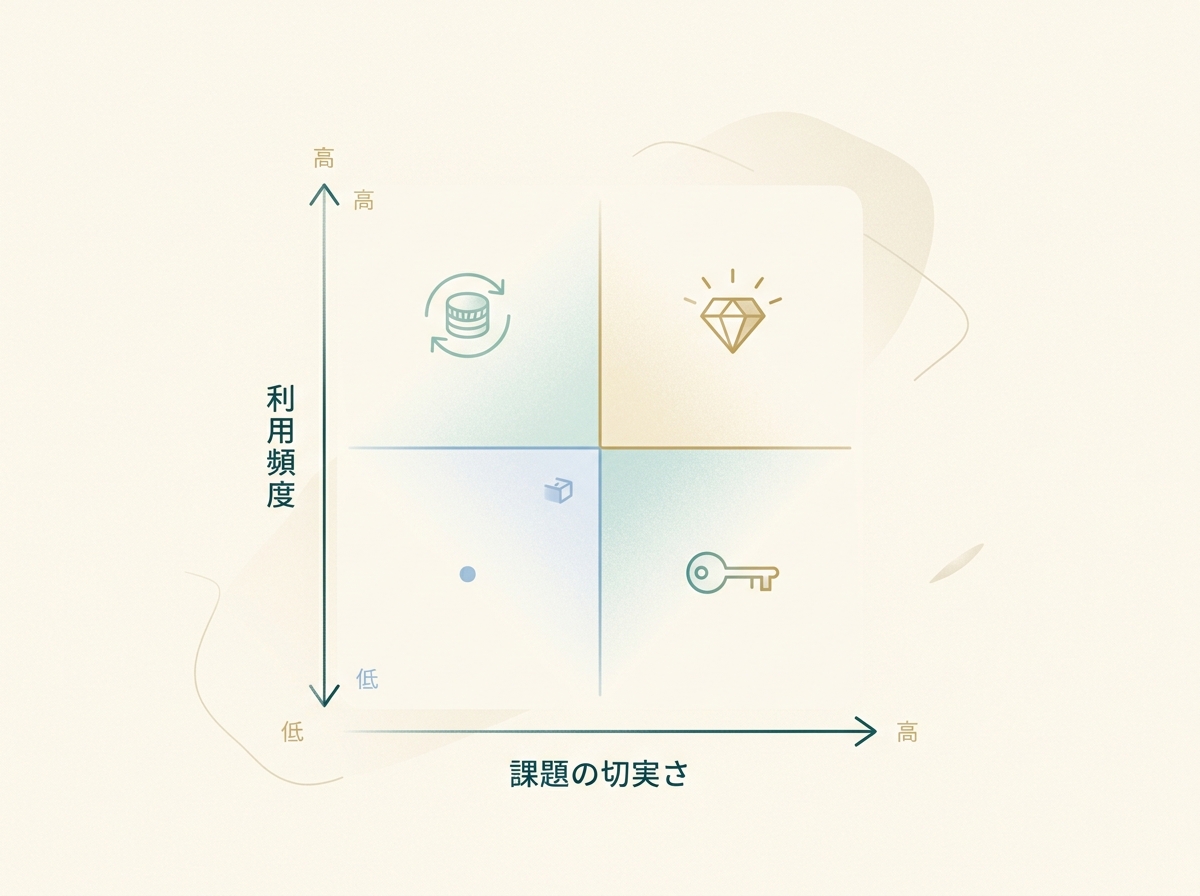
Here's a breakdown of when each model fits.
- Subscription: Suited for tools with ongoing use, services embedded in business workflows
- One-time purchase: Suited for tools where the goal is achieved in a single use, template sales, etc.
- Ads: Suited for services you want to offer free and wide, but revenue is unstable for indie developers
- Hybrid with freelance/consulting: A model where the product generates consulting or custom development leads
An often-overlooked option is combining multiple models. For example, you can earn ad revenue from free core features while offering premium features as a one-time purchase. Or you can build stable subscription revenue as a base while taking customization requests as consulting work.
You don't need to pick the perfect model from day one. Starting small and adjusting the model based on user feedback is the realistic approach. That said, you should have a hypothesis about which model to try first before development begins—figuring out "so how do I make money" after launch is too late.
SECTION 07
Design Decision 3: Why Ad Dependency Is Painful and How to Price for Small Audiences
The monetization approach that looks easiest for indie developers is the ad model. Ship for free, gather users, and earn from ads. It seems simple, but relying solely on ads at indie development scale often leads to a painful situation.
The reason the ad model is tough for indie developers is straightforward: you need massive traffic to generate meaningful revenue. Ad rates fluctuate year to year, and you're also subject to platform policy changes and tracking restrictions. Maintaining stable traffic as an individual is more draining than you'd imagine.
This is where pricing that works even with a small user base becomes critical. The basic approach is as follows.
- Calculate your price backward from "how many users do I need to sustain myself"
- Prices that are too low tend to result in losses when you factor in support costs
- For business tools, users will pay if the price is low relative to the value they receive
The most common pricing mistake indie developers make is setting prices too low. There's a belief that "since an individual made this, I can't charge much," but if the product delivers value, price doesn't matter. In fact, pricing too low can create an impression of "an unreliable service."
For mobile apps, you also need to factor platform fees into your pricing design. If you don't calculate your take-home after fees, your actual profit will be significantly lower than expected.
Direct billing through a web app leaves a larger share in your hands, so platform selection should be considered as part of your revenue design.
SECTION 08
Design Decision 4: Decide Where Users Come From Before Adding Features
One of the easiest traps for indie developers is the belief that adding more features will bring users. In reality, no matter how great your features are, users won't grow if they don't know your product exists.
Acquisition funnel design is a decision that should be made before development. If you can't concretely envision "where users will come from after launch," you need to rethink your acquisition strategy before building.
Here are the acquisition channels realistically available to indie developers.
- Organic search (SEO): Create content targeting people searching for specific problems
- Social media: Share your development process, post about relevant problems to connect with potential users
- Communities: Build awareness in existing communities where your target audience gathers
- Word of mouth: Build mechanisms into your product that make existing users want to naturally share it
The important thing is not to try all channels at once. With limited resources in indie development, narrowing down to the one or two channels most likely to be effective and focusing there produces better results.
To run acquisition without cutting too much into development time, integrating your daily development activities with acquisition activities is the practical approach. For example, sharing insights gained during development on a blog or social media means development and acquisition progress simultaneously. Carving out separate blocks of time for acquisition just isn't realistic for indie developers.
SECTION 09
Design Decision 5: When Subscriptions Work for App Development and When They Don't
Subscriptions are often talked about as the gold standard for stable revenue, but maintaining a subscription as an indie developer is harder than you'd think. Monthly billing means users must continuously feel that paying every month is worth it. That implies ongoing improvements and a certain level of support.
The conditions where subscriptions work for indie development are limited. The tool must be deeply embedded in the user's daily workflow and used almost every day. The user's dependence must be deep enough that canceling would disrupt their work. When these conditions are met, even a small user base can become a stable revenue foundation.
On the other hand, there are clear cases where subscriptions don't work.
- Low-frequency tools: Few people will keep paying monthly for something they use only a few times a month
- Services where the purpose is achieved in a single use
- Products that risk scaling to a volume where you can't handle support and customer inquiries alone
If you adopt a subscription model, you need to be prepared to fight churn. Even if you acquire new users, revenue won't grow if they cancel at the same rate. You can easily fall into a dilemma where time spent on anti-churn improvements stalls new feature development.
In my experience, the difference between services where subscriptions worked and those where they didn't was crystal clear. Whether the product could embed itself into the user's "daily workflow" was the dividing line. If it can't get into that workflow, one-time purchase or hybrid models are a better fit for indie development.
SECTION 10
How to Find Niche Markets: A Step-by-Step Process for Winning as an Indie Developer
To make monetization work in indie development, the decision to not compete in large markets is crucial. Large markets are dominated by well-funded teams, and competing head-on as an individual only gets you buried.
The most reliable way to find a niche market starts with inventorying your past career and work experience. Memories like "that step in that process—there was no tool for it, so we did it manually" or "that Excel sheet was painful to create every month" contain niche problems waiting to be solved.
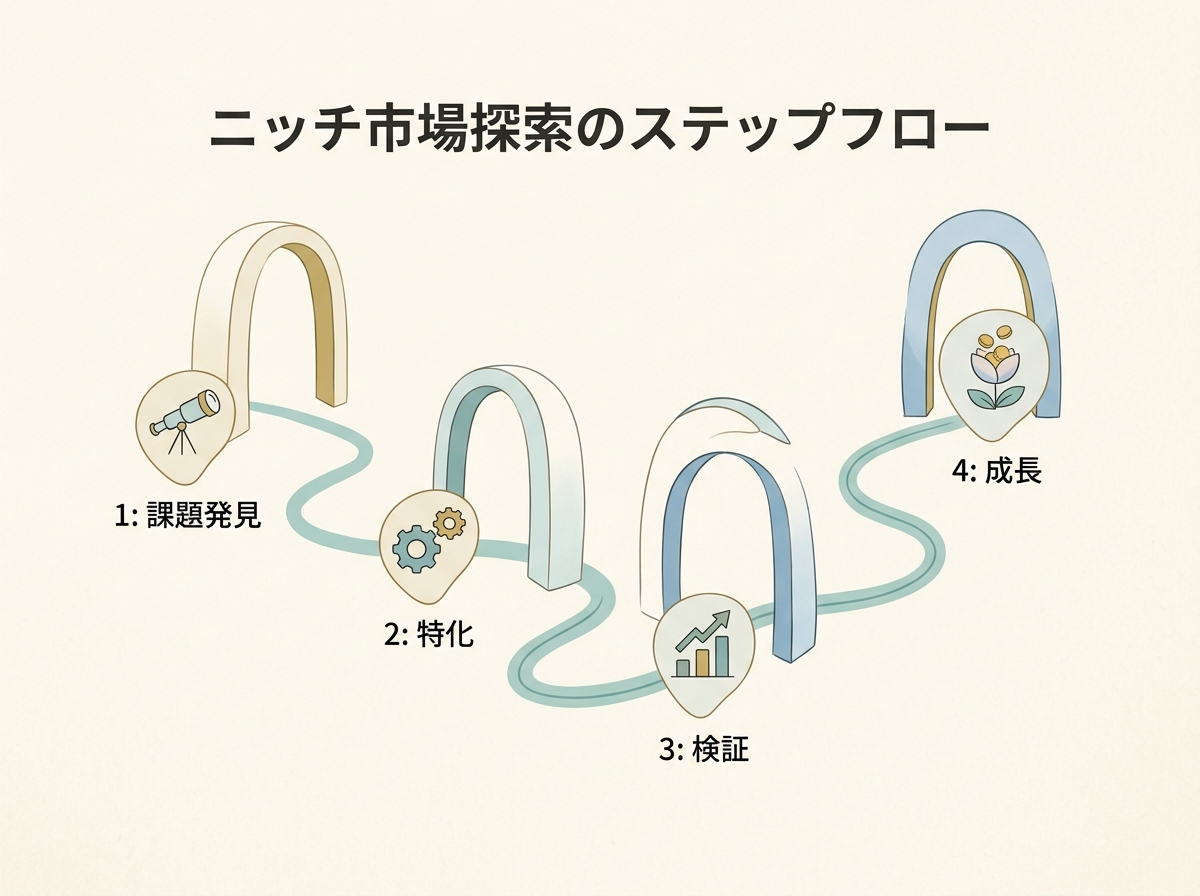
Here are the concrete steps for exploration.
- List "things that were inconvenient but tolerated" in your past roles
- From that list, verify whether others likely share the same inconvenience
- Research whether existing solutions exist and find their gaps
- Directly ask whether people would pay for a tool that solves that problem
Be careful of cases where the niche is so narrow that no market exists. If you're the only one with the problem and nobody else is struggling with it, users won't come. At minimum, confirm that you have a way to reach people who share the same problem before starting development.
The beauty of niche markets is that you can deliver deep value even to a small audience. The market is too small for large companies to bother entering, but it generates sufficient revenue for an indie developer. The ability to identify this sweet spot—"too small for big players, but just right for an individual"—is the most practical skill in indie dev monetization.
SECTION 11
What to Review First When You Realize Your Product Isn't Selling
Many of you may have already built a product that isn't selling. In that case, the first thing to do is not add features, but review your funnel and messaging. In most cases, the product itself isn't the problem—it's how you're delivering it.
Specifically, start by reviewing your landing page or app store listing. Can someone instantly understand what this product solves? Is it written in language that the target audience would recognize as their own problem? If this doesn't resonate, no amount of great features will get people to try it.
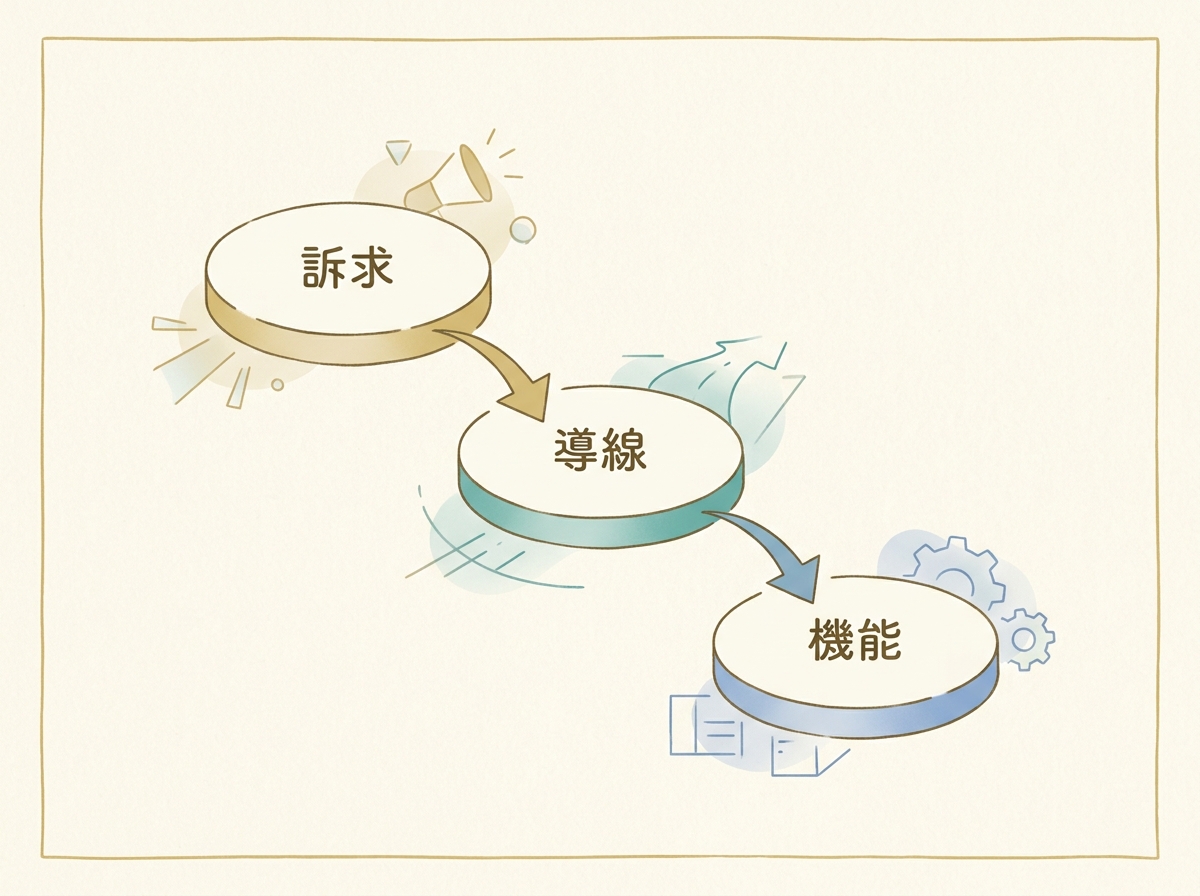
After reviewing your messaging, work through improvements in this order.
- Improve messaging: Clarify what it solves and who it's for
- Improve the funnel: Build out the path users take to discover your product
- Improve features: Only tackle this if the first two changes show no effect
If improvements still aren't promising, you need to decide between pivoting and shutting down. The criteria are simple: ask whether the target's problem actually exists. If the problem exists, a pivot that changes the solution approach can work. If the problem itself didn't exist, cut your losses early and move on to the next product.
In my own experience, there was a service where the initial direction wasn't working, and I had to make the call to change course. What I learned from that was that "speed of cutting losses" is one of the most important abilities an indie developer can have. Rather than clinging to one product, taking what you've learned and moving quickly to the next attempt actually raises your overall odds of monetization success.
Indie dev monetization isn't a game where you hit the right answer on the first try. Building small, validating fast, and continuously correcting your design decisions is the most reliable approach. Simply being conscious of the 5 design decisions introduced in this article before development can dramatically reduce your chances of falling into the classic trap of "built it but it doesn't sell."