SECTION 01
Can You Sell an Indie App? The Verdict and What Makes It Sellable
The short answer is yes, you can sell indie-developed apps and web services. However, not everything sells. The deciding factor is whether a buyer feels confident they can take over and run it themselves.
I've built over 40 services so far, but honestly, only a handful made it to an actual sale. Most either ended up with zero users or stalled before reaching monetization. That said, the ones that worked all had something in common.
Here are the conditions that sellable products consistently share:
- Recurring revenue (stable income from subscriptions or advertising)
- Retained users (people who actually keep using the product, not just registered accounts)
- Non-dependent operations (the service keeps running even if the creator steps away)
Fundamentally, if even a small amount of revenue is coming in consistently, there's a chance. Buyers aren't just looking at how much you're earning now—they're evaluating whether that revenue will continue and whether it can grow.
On the flip side, the characteristics of unsellable products are equally clear. Zero revenue, only the creator can deploy or handle incidents, and overwhelming technical debt—in these conditions, there's no upside for a buyer to take over.
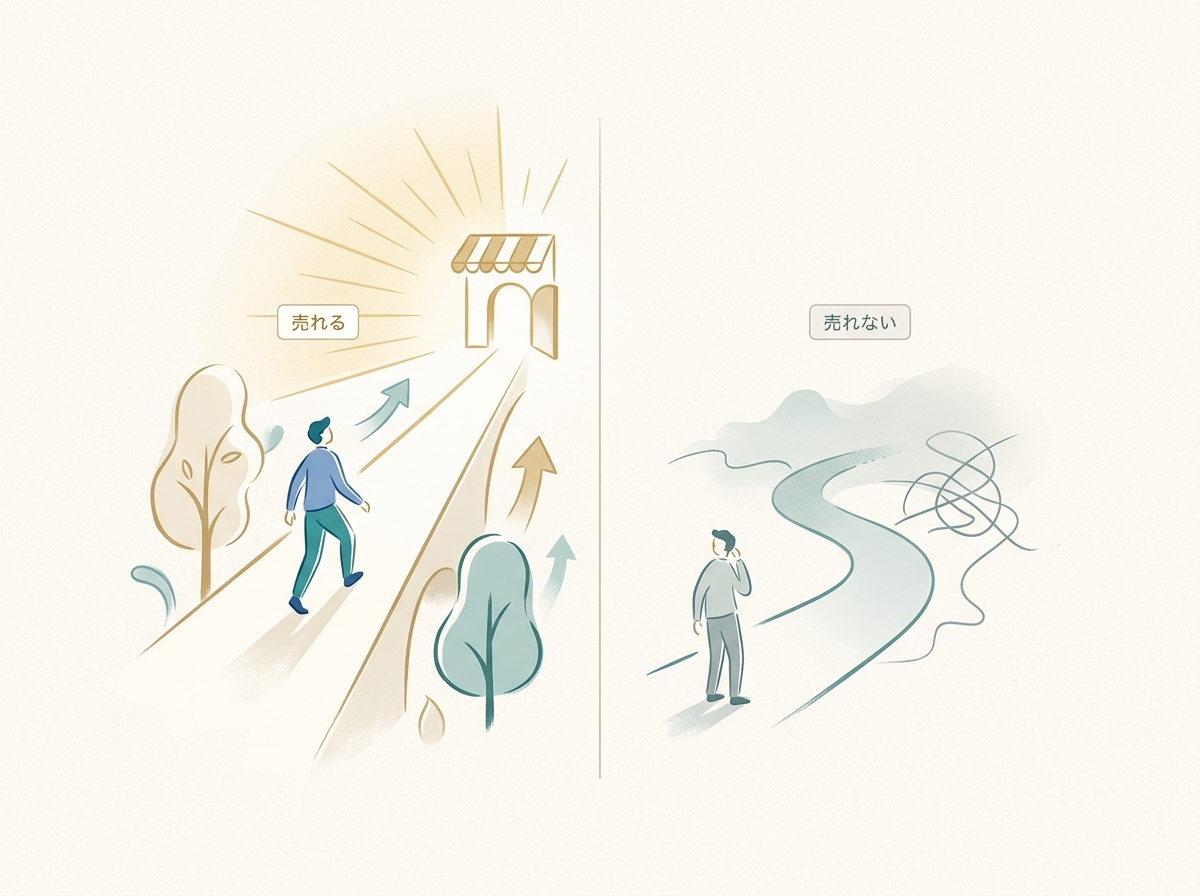
If you're thinking about a sale, the key question to keep asking yourself is "would value remain if I disappeared?" Technical completeness alone isn't enough—users and revenue must exist as a package. That's the minimum bar.
SECTION 02
How Much Can You Sell For? Pricing and Market Expectations
The question indie developers care about most is "how much will it actually sell for?" The basic approach is to use monthly profit as a baseline and multiply it by a certain factor to arrive at a target sale price.
However, this multiplier fluctuates significantly depending on the buyer's synergies. If the buyer sees value in combining your product with their existing business, the price goes up. If they're evaluating the product's standalone earning power alone, it goes down.
A common trap for indie developers is swinging between overvaluation and undervaluation. When you're emotionally attached, you feel it should be worth more. When you lack confidence, you drop the price too low, thinking "there's no way anyone would buy this."
In my own experience, I sold a service generating about ¥120,000 per month for several million yen. The scale might seem small, but when there's consistent revenue and an established user base, buyers see real value.
I was able to feel good about the price because I had set my own minimum threshold beforehand. If you start thinking about your bottom line for the first time at the negotiation table, you'll get pulled into the buyer's pace.
To avoid losing control in negotiations, there are a few things you should do at minimum:
- Decide your minimum acceptable sale price in advance
- Visualize revenue trends on a monthly basis so you can present them as evidence
- Talk to multiple potential buyers simultaneously to maintain room for comparison
SECTION 03
Preparing Your Product for Sale
If you wait until you've decided to sell before scrambling to prepare, it's already too late. Buyers look at a fixed set of metrics, so it's crucial to accumulate data on an ongoing basis.
Here are the key metrics buyers typically check:
- Monthly revenue and profit trends
- Active user count and churn rate trends
- Primary acquisition channels and customer acquisition costs
On the technical side, you need to prepare for source code and infrastructure handover. This means organizing your GitHub repository, documenting environment variables and secrets, and taking stock of contracts with external services (payment processors, email delivery, analytics tools, etc.).
What's easy to overlook is eliminating single points of dependency. Operational procedures only you know, external services tied to your personal account, undocumented deployment steps—if any of these remain, buyers will push the price down to account for handover costs.
Don't forget the legal side either. You need to have your terms of service, privacy policy, and licenses for libraries you use in order. Open-source license compliance, in particular, is a common sticking point during the buyer's legal review.
The ideal state is to create a situation where "the service keeps running even if you disappeared tomorrow." If you've achieved this, you'll be in a strong position during sale negotiations.
SECTION 04
Where to Sell: Choosing a Sales Channel
The options for selling indie products have grown considerably compared to before. With the development of M&A platforms targeting individuals and small businesses, it's now possible to complete a sale on your own without going through a broker.
The main factor when choosing a channel is scale and price range. For smaller transfers, dealing directly on a platform is convenient. For larger deals, using a broker is safer.
Here's what to look for when choosing a platform:
- Does it offer auto-generated contracts or templates?
- Does it provide legal consultation or escrow (temporary holding of funds) features?
- Can you verify past transaction records and user reviews?
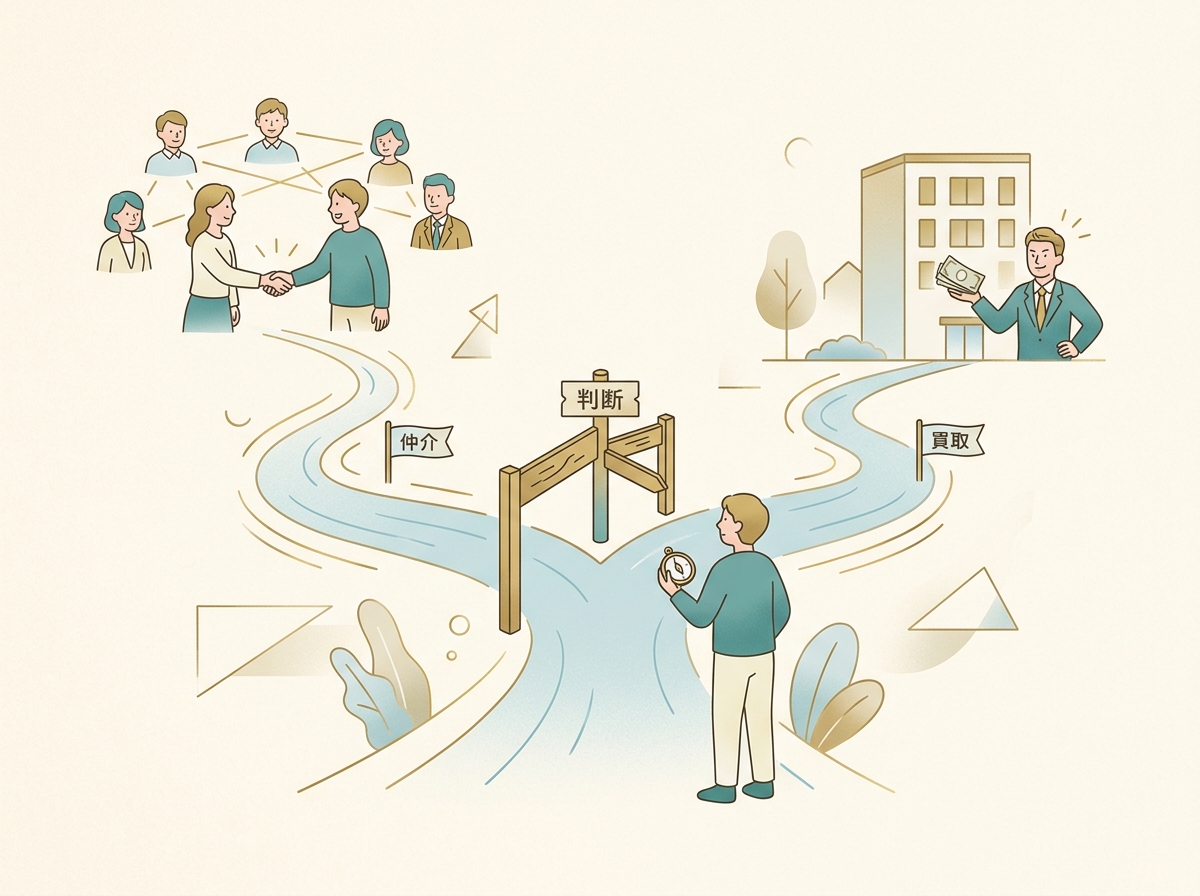
Direct negotiation saves on fees, but you also bear the risk of contract disputes yourself. If it's your first sale, it's safer to rely on a broker or platform's built-in protections, even if it costs a bit more.
The important thing is to prepare your product first, then choose a channel—not the other way around. If you list before you're ready, buyers won't be interested.
SECTION 05
The Sale Process: From Initial Contact to Completed Handover
The sale process broadly follows these steps: "initial contact → negotiation → contract → handover → payment." From first contact to completion, it typically takes anywhere from a few weeks to several months.
The first step is making contact with buyers and aligning on terms. If you're using a platform, interested buyers will reach out to you. At this stage, share your product overview and revenue data while maintaining confidentiality awareness.
If terms are agreeable, you move on to signing the contract. The one thing you must never do here is start the handover based on a verbal agreement alone. Cases where people proceed with "let's put it in writing later" and then run into trouble actually happen.
Here are the practical handover details that are easy to overlook:
- Transfer of copyright (this becomes ambiguous if not explicitly stated in the contract)
- License verification and handover for external libraries
- Transfer of domains, servers, payment accounts, and social media accounts
Don't forget about taxes. Sale proceeds are subject to tax filing. For individuals, they're often treated as capital gains, but there are gray areas such as the distinction from business income, so consulting a tax accountant is the safe bet if you're unsure.
Throughout the entire process, keep in mind that "completed handover" is the real finish line. The sale isn't done when the contract is signed—it's done when the buyer is successfully operating the product without issues.
SECTION 06
Sell or Keep? A Framework for Deciding Without Regret
When considering a sale, many developers wrestle with the question "is it really okay to let this go?" You're attached to what you've built, and you might regret it if the buyer grows it significantly after the sale—that anxiety is completely natural.
First, as a premise: selling is not the same as failing. Choosing a strategic exit through a sale is a rational decision that lets you concentrate your time and capital on your next product.
The reason I sold my service that was earning ¥120,000 per month was exactly this. When you're running multiple services solo as an indie developer, support costs and mental burden steadily accumulate. By selling and letting go of that service, I was able to redirect my resources to the product I truly wanted to focus on.
In the case of the online mentoring service MENTA, the sale was in the hundreds of millions of yen range. The product had grown to a scale that required team-based development, and I judged that it would grow even more under a well-resourced company with a proven track record of scaling.
On top of that, receiving a lump sum provides financial stability and makes it easier to take on the next challenge. It's essentially like buying several years of time upfront.
Of course, everyone thinks about selling differently:
- The product might grow even more after you let it go, or it might decline
- Some people want to keep growing it themselves, while others love the zero-to-one phase and want to build something new
I was the latter. After years of trial and error, here are the criteria I've settled on for deciding whether to keep or sell:
- Can I sustain my passion for this product?
- Can the current growth pace be maintained or accelerated with my resources alone?
- Can the funds and time gained from a sale be invested in a bigger opportunity?
The difference between people who regret a sale and those who don't comes down to whether they let go with a sense of conviction. More than the dollar amount, what matters is whether you've internalized "I gave it my all" and "this is a decision to move forward."
Taking the funds and time from a sale and channeling them into your next product—once you can run the "build → grow → sell" cycle, the sustainability of indie development improves dramatically. Not clinging too tightly to any single product is the secret to staying in the game long-term.
SECTION 07
Starting App Development with an Exit in Mind
When you start building with an exit in view from the beginning, your decision-making criteria change. It's not just about "what I want to use" anymore—the perspective of "could someone else take this over and run it?" gets added to every choice.
If you reverse-engineer the conditions for a sellable product, the things you should do in early development become clear:
- Incorporate a revenue model early on (don't grow it too long as a free product)
- Prioritize documentation and code readability from the start
- Keep external service dependencies minimal and transferable
Looking back at MENTA, I believe what made that service sellable was that we built features based on user feedback. Instead of building from assumptions, we kept solving real problems for actual users. As a result, users stuck around and revenue stabilized.
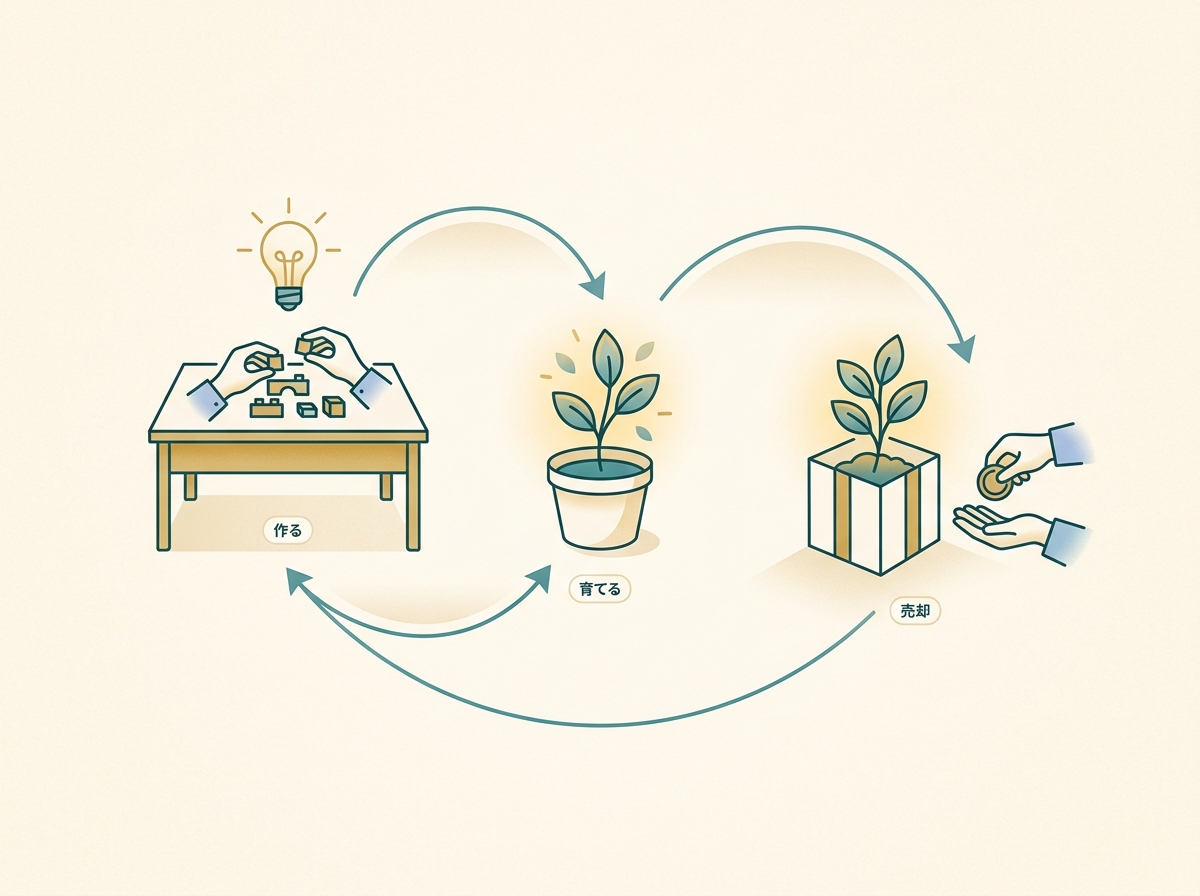
"Building with a sale in mind" might sound calculated. But in reality, aiming for a sellable state is virtually synonymous with building a good product. Users exist, revenue flows, and anyone can operate it—this is a desirable state not just for buyers, but for users too.
The experience gained from failures becomes a real asset. The accumulated judgment of "this pattern doesn't work" and "if it reaches this stage and looks like this, it won't grow" raises the success rate of your next product. Having a sale as a goal transforms the act of building into a more strategic and sustainable endeavor.
SECTION 08
The Emotional Reality of Selling: What the Numbers Don't Tell You
When people talk about selling, the conversation tends to center on numbers—price, terms, multiples. But when you actually go through it, you realize the emotional struggle is far greater than expected.
The moment you hand over a product you've nurtured for months or years to someone else, there's a sadness even when you know it's the rational choice. You remember thank-you messages from users, and memories of handling outages at 3 AM come flooding back.
At the same time, the sense of liberation when you let go is equally real. Being freed from the responsibility of operations finally lets you focus on what's next. This feeling of release might be something only those who've been through a sale can truly understand.
Here's what I keep in mind to reduce emotional regret:
- Before the sale, write down "why I'm selling" in your own words
- Decide that you won't interfere with the product no matter what happens after the sale
- Decide "what I'll do next" with the funds and time before you sell
A sale is not an ending—it's a transition point to a new beginning. Don't let emotions control you, but don't ignore them either. When you can maintain that balance, you'll be able to see selling as a positive choice.