
SECTION 01
Why AI-Written Content Becomes Generic
When you tell AI to "write an article about X," it returns well-structured text. The grammar is correct, and the organization is reasonably logical.
But when you read it back, it looks like something you've seen somewhere before.
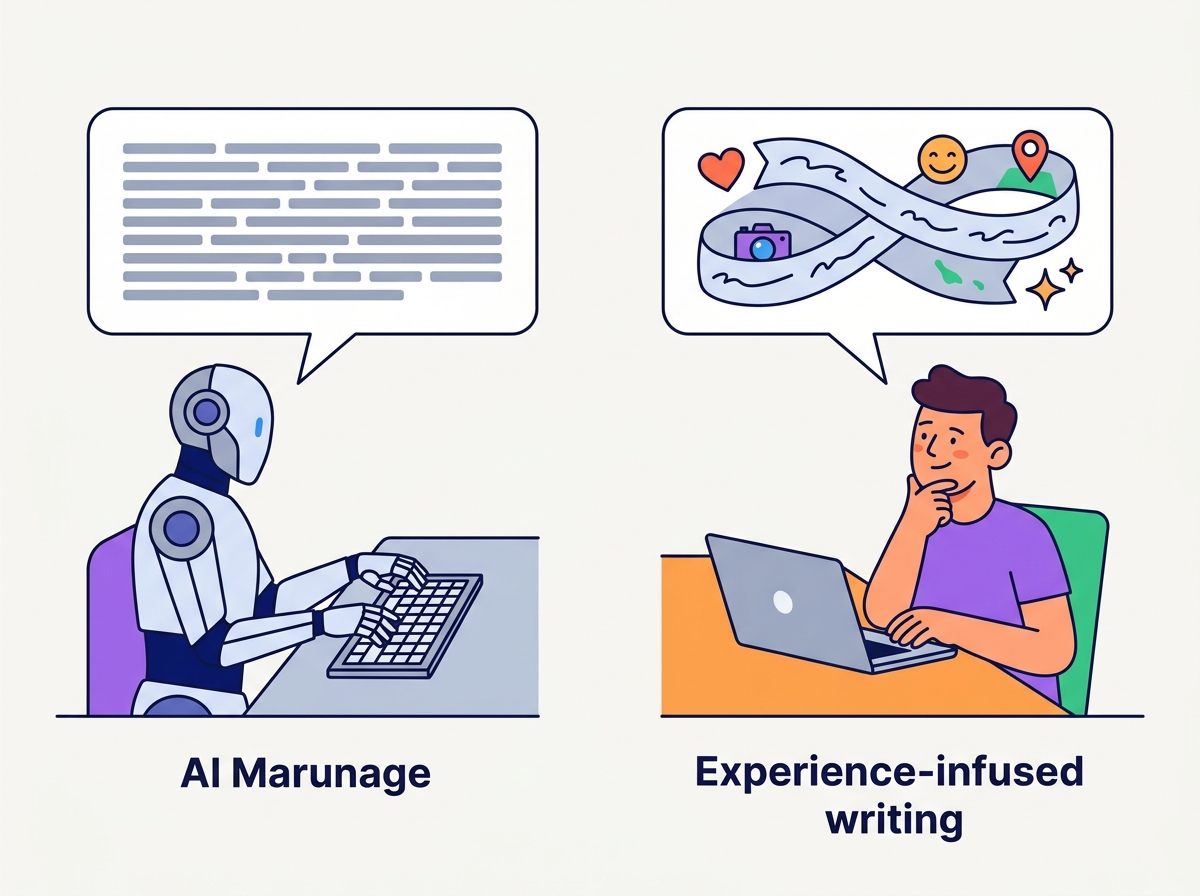
The source of this unease is clear: AI-generated text carries none of the writer's lived experience. Lessons learned from failure, decisions made after careful deliberation, the tactile feel of being in the trenches — writing produced with zero firsthand information like this won't stick in readers' minds, no matter how polished it is.
Some say the solution is better prompts. But prompts alone have their limits.
Even if you instruct "use a casual tone" or "include personal anecdotes," the anecdotes AI creates are ultimately fictional. Readers intuitively sense the lack of authentic roughness.
The problem, in other words, isn't AI's capabilities — it's the design of how you use it. A workflow where you simply hand everything off to AI has a built-in structure that erases authorship. Unless you change this, the result will be the same regardless of which model you use.
Another often-overlooked distinction is the difference between writing style and decision-making criteria. Style refers to word choices and phrasing, but decision-making criteria refers to the axis of thinking behind "why you made that choice."
What AI cannot replicate is the latter, and writing that lacks it becomes superficially similar but hollow inside.
SECTION 02
The Answer: Just Let AI Ask You Questions to Restore Originality
My answer to this problem was a shift in thinking: instead of having AI write, have AI ask questions. Simply returning creative control to the human completely transforms the quality of the writing.
Here's the specific flow. First, you give AI the topic and structure, then instruct it: "Generate questions that will draw out the author's firsthand information needed for this article." The AI then asks things like "Have you had any failures related to this topic?" or "Why did you choose that particular approach?"
This method works because when asked a question, humans are compelled to think. Even if nothing comes to mind when vaguely told to "write something," being asked "why did you make that decision" brings specific episodes to the surface. It's the same structure as an interview.
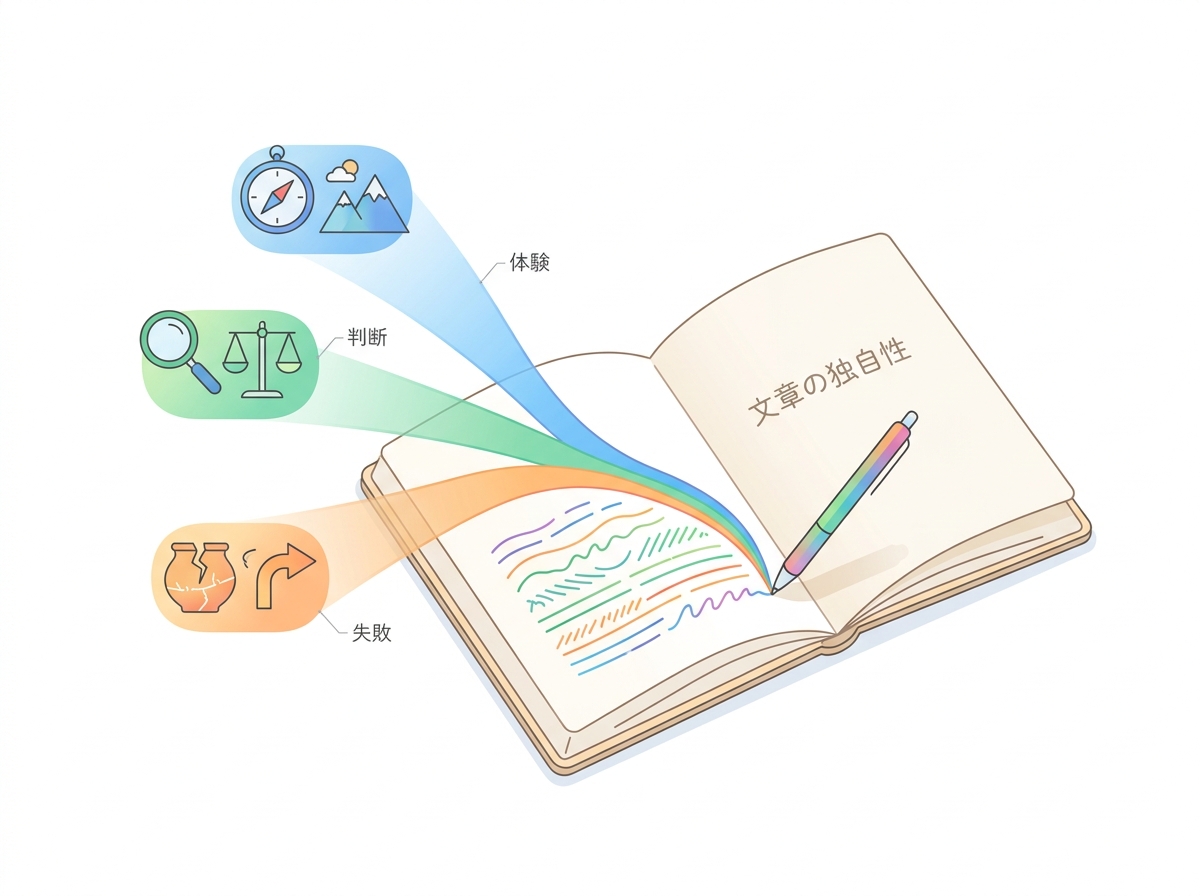
What gets drawn out falls mainly into three categories:
- Experiences: Things you learned by actually doing them
- Decision criteria: Why you chose B over A
- Emotions: The anxiety when things weren't working, the satisfaction when they succeeded
These are types of information AI cannot generate on its own, and they are precisely the elements that define an article's originality. Just by adding the step of question → answer → writing, articles on the same topic become unlike anyone else's.
This very article was written using this flow. AI poses questions to the author, then uses the answers as raw material for composition — once you try this method, you'll never go back to simply dumping everything on AI.
SECTION 03
What Questions Should AI Ask for Better Writing?
Even when having AI ask questions, the quality of the questions dramatically affects the depth of information you can extract. Vague questions yield vague answers. Here are the question patterns that proved most effective in practice.
First, questions that draw out personal stories. Questions like "What was the first thing that didn't go well with this topic?" and "What turned out differently from what you expected when you actually tried it?" work well.
By directing attention to specific past situations, you get real descriptions rather than abstract generalizations.
Next, questions that draw out decision-making criteria. These have the most direct impact on an article's originality.
- "Among the other options available, why did you choose this approach?"
- "If you faced the same situation again, would you make a different decision?"
- "What was the single most important criterion when you made this decision?"
Then, questions that draw out failure stories. "Is there anything you wish you hadn't done?" "What was the reason you changed direction midway?" Failure stories are the material that resonates most strongly with readers, and they are also information that AI absolutely cannot generate.
What matters is drawing a clear line between what AI handles and what you answer yourself. Organizing structure, supplementing information, and polishing prose can all be left to AI.
But "why," "how you felt," and "what you chose" must always be answered by you. As long as you maintain this boundary, your authorship won't fade even when using AI.
SECTION 04
Boosting Accuracy with "Self AI" — How to Leverage 40,000 Texts
What took the question-and-answer writing flow to the next level was a system called Self AI. Self AI is a Mac app that ingests text data you've written over time and creates a state where it can produce output as if it were you.

The data I fed in includes roughly 40,000 items from emails, X (formerly Twitter), note, Notion, memos, and more. With this volume, it becomes possible to replicate not just writing style but also thinking patterns and areas of interest. It's close to a digital clone of yourself.
An interesting discovery was that different types of data are effective for replicating different aspects:
- Emails and chats: Conversational writing style, response tempo
- Social media posts: How you express opinions, emotional expression habits
- Memos and Google Keep: Fragments of thought, trends in topics of interest
- Long-form articles and note posts: Patterns in logical development, how arguments are constructed
As a technical choice, I adopted a method combining Claude Code with chronological profiles rather than RAG (Retrieval-Augmented Generation). RAG is a technique where documents relevant to a query are retrieved and fed to the AI as reference. While strong for factual retrieval, it's not well-suited for replicating writing style and thinking patterns.
With the chronological profile approach, past texts are organized along a timeline and structured as a persona. It creates a form the AI can understand — what topics the person was interested in at different periods and how their thinking evolved.
This enables replication that includes not just "who I am now" but the evolution of my thinking.
As for how much data is needed to reach a practical level, a few thousand items are enough to capture stylistic tendencies. However, replicating decision-making criteria and thinking patterns required data in the tens of thousands.
The habit of consistently externalizing thoughts into text ultimately supports the accuracy of Self AI.
SECTION 05
In Practice: 8 Steps to Complete One Article
From here, I'll walk you through the specific article production flow using Self AI. I currently produce each article following these 8 steps. This very article was written using exactly this process.
The first 4 steps cover theme and structure design:
- Research search demand: Understand what readers want to know
- Dig deeper into search intent: Identify the real pain points behind surface-level keywords
- Extract knowledge from Self AI: Pull out your past experiences and insights related to the topic
- Decide on the title: Choose an angle where search intent and your unique perspective intersect
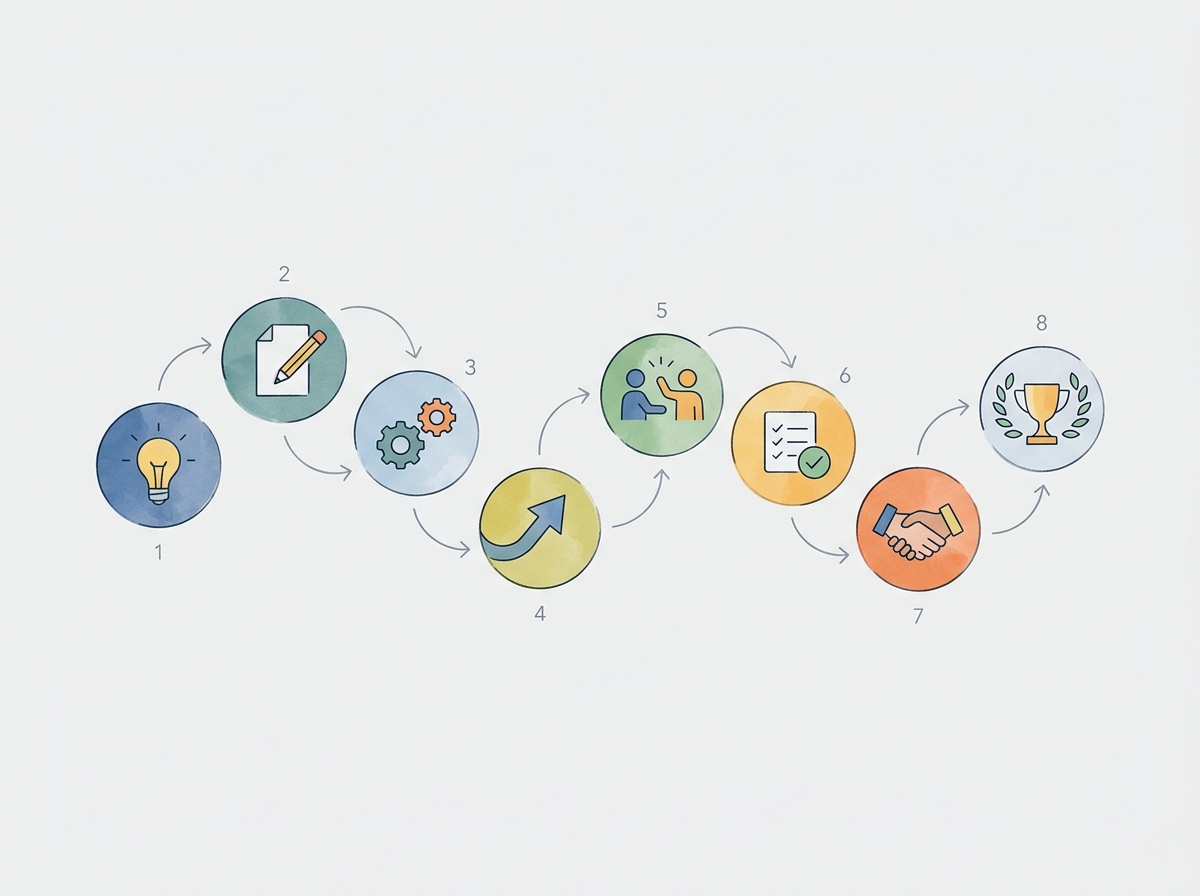
The last 4 steps cover writing and finishing:
- Decide on structure: Finalize the section structure in consultation with Self AI
- Write: AI asks questions, and you write the body by answering them
- Generate a thumbnail: Create an image that matches the article's content
- Article complete: Do a final check and publish
The most critical steps in this flow are steps 3 and 6. In step 3, Self AI finds relevant knowledge from your past texts. In step 6, the AI asks things like "Please share your real-world experience on this point."
The decisive difference from the traditional "let AI write the article" flow is that human input enters twice. Having two touchpoints — knowledge extraction and question-answering — ensures the author's experience permeates the entire article.
AI strictly serves as the interviewer and the organizer.
SECTION 06
Why Chronological Profiles Over RAG
The most debated aspect of Self AI's technical design is why I didn't use RAG. RAG is a standard technique for leveraging LLMs (Large Language Models) and works effectively in many scenarios. However, for content creation specifically, I felt its limitations.
RAG works by searching for text fragments relevant to a query and passing them as context. It can retrieve "articles Irie wrote about AI" and pull them in.
But that's ultimately just cutting and pasting past writing, not replicating thinking patterns.
What content creation demands is the ability to output "how I would think" about a completely new topic. Even for topics I've never written about before, I want the writing to reflect my decision-making criteria and perspective habits. With RAG, accuracy drops significantly for topics with no reference material.
The chronological profile approach treats texts not as information sources but as building materials for constructing a persona. By structuring interests by time period, changes in thinking, and core values, it becomes possible to infer "this person would probably think about it this way" even for new topics.
Another advantage is consistency of writing style. When RAG references fragments, the output can become inconsistent, pulled by the style of whichever source text was retrieved. With the profile approach, stylistic characteristics are maintained as part of the persona, enabling stable writing style regardless of the topic.
That said, this approach also has tradeoffs. Building the profile takes effort, and with insufficient data the persona becomes thin. It's not a silver bullet, but for the specific goal of "writing that sounds like me," it was a better fit than RAG.
SECTION 07
Quality Checks to Maintain "Publish Under My Name" Standards at Scale
Leveraging AI dramatically increases article production speed. But there's no point if quality drops in exchange for speed. To maintain a level I can publish under my own name even when producing at scale, I always check the following points before publishing.
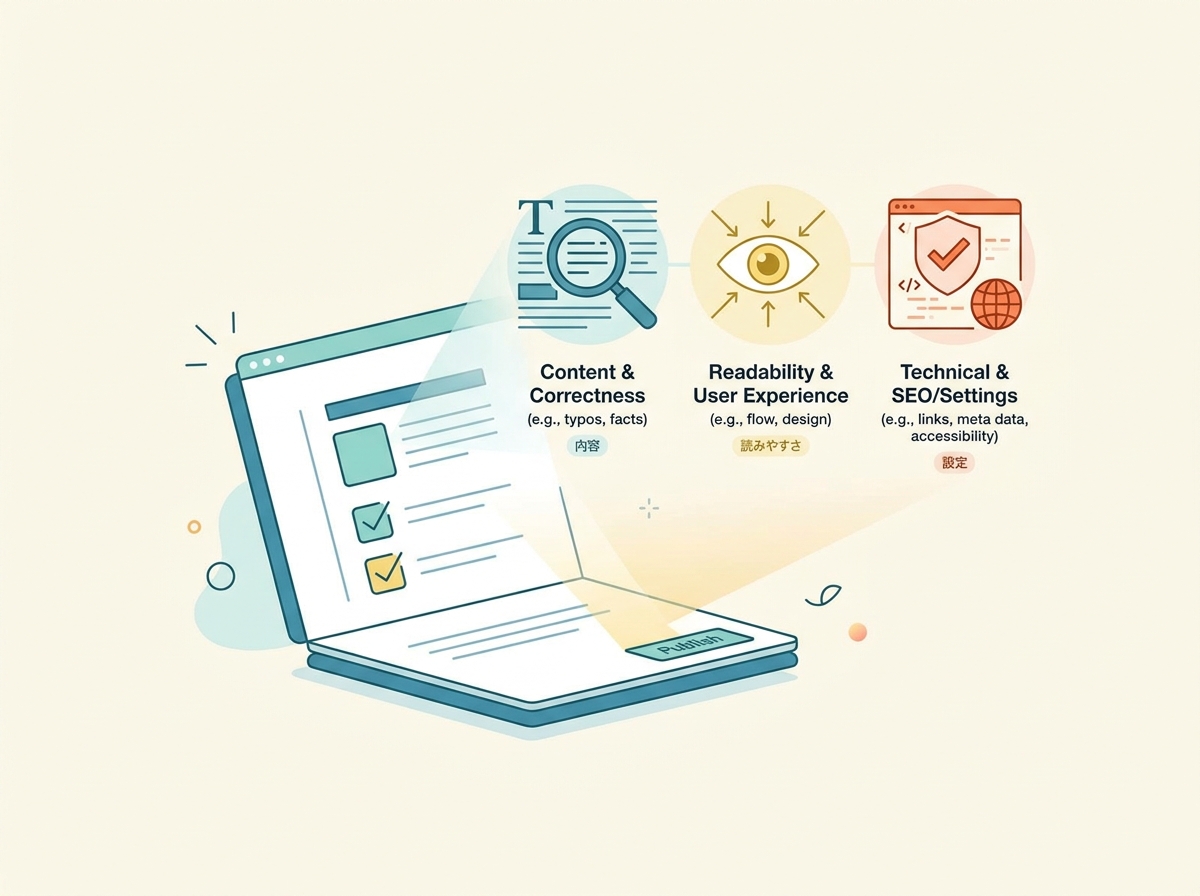
Checks are done from three perspectives:
- Fact-checking: Are there errors in AI-generated information? Especially technical explanations and proper nouns
- Style drift: Are there phrasings I'd never normally use, or expressions that are excessively formal?
- Diluted authorship: Are my experiences and judgments sufficiently reflected throughout the article?
The third point — "diluted authorship" — is the easiest to overlook. Even if each individual sentence reads naturally, a state where there's nothing in the article that "only this person could have written" happens easily when using AI.
As a concrete verification method, I check each section of the article to see whether it contains my personal experience or judgment. If any section has none, that's a section I dumped entirely on AI. I either add my perspective there or cut the section entirely.
Another thing I'm conscious of is the balance between what AI wrote and what I personally answered. The ideal ratio is: AI handles the skeleton and detailed explanations, while I provide the core arguments and experiences.
When this balance breaks down, readers pick up on the "AI-ness" of the writing.
SECTION 08
Systematizing Content Creation So App Developers Never Stop Publishing
When you're building products independently, you can get absorbed in "making" but keep putting off the publishing needed to "get known". This is a challenge I've experienced many times firsthand, and it's a bottleneck I've keenly felt across building over 40 products.
During my freelance years, consistently writing blog posts was my lifeline for landing projects. Continuing to publish expanded my visibility, which repeatedly led to work. Writing wasn't something I did "when I had the time" — it was a survival strategy itself.
But when development gets busy, you inevitably run out of bandwidth. The more products you build, the less time you have to get each one noticed. To solve this structural problem, I'm working on systematizing content creation using Self AI.
What I'm currently developing is a marketing tool that handles everything from keyword selection to article writing using Self AI. I run an owned media site introducing products I've built, with a semi-automated article production flow. Eventually, I'm looking to extend this to short-form video production as well.
The core of this system is that authorial originality is maintained even at scale. Because Self AI understands thinking patterns from past texts, it can balance efficiency with quality.
Unlike generic AI writing tools, the goal is a quality level where it can be published as something "I" wrote.
It's not yet in its final form, but in an era where even one person can multiply their output, the idea of running a digital version of yourself has become a realistic option. For indie developers, balancing building and distributing is an eternal challenge, but Self AI can be one solution to that.
SECTION 09
The Paradox: The More You Use AI, the More Your Own Thinking Matters
When discussing AI writing, the conversation often turns to "once AI advances enough, humans won't need to write anymore." But when you use it deeply in practice, the opposite happens. The more you use AI, the more the quality of your own thinking is put to the test.
AI excels at organizing structure, supplementing information, and polishing prose. But "what to argue," "which experience to highlight," and "why you made that judgment" cannot be extracted if the writer doesn't possess them in the first place.
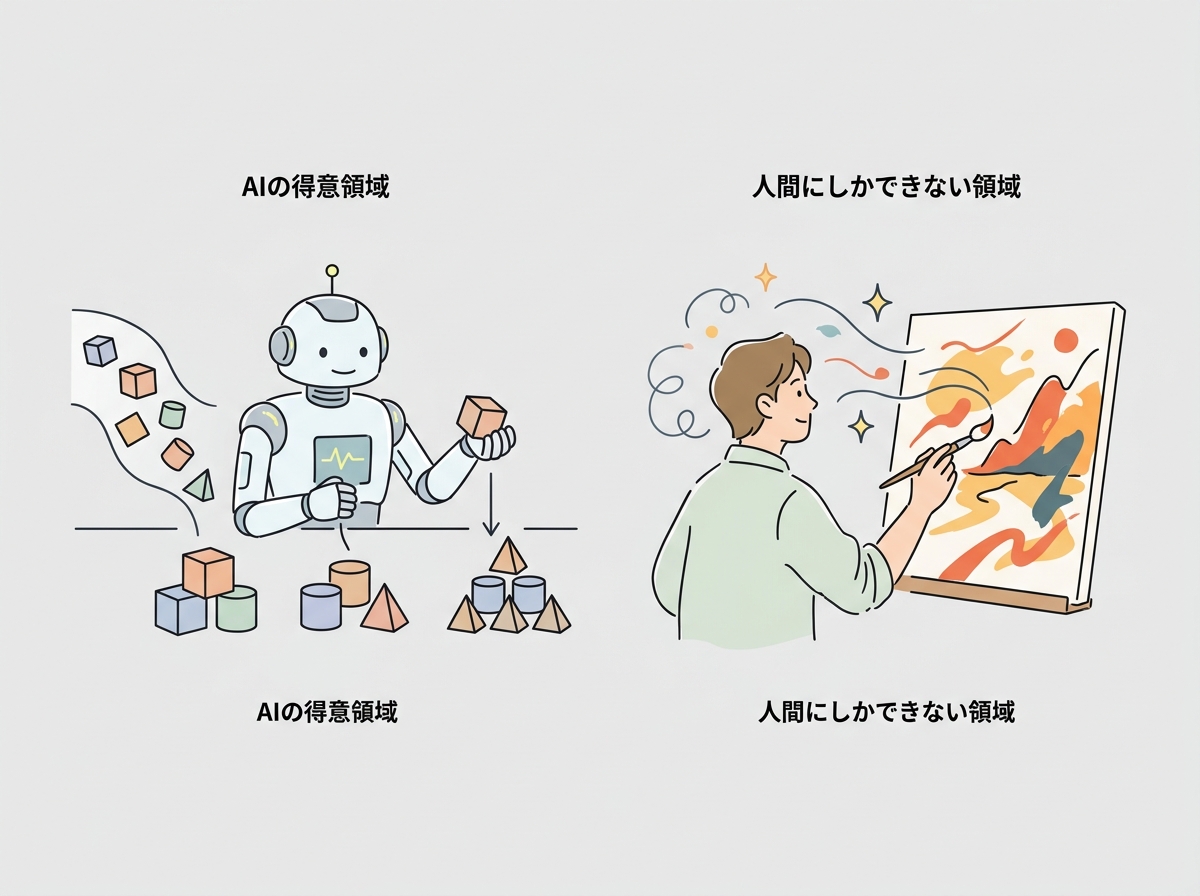
In other words, what determines the quality of AI writing is not AI's performance but the quality of the writer's input. People who habitually think, record, and articulate their thoughts produce higher-quality output when they use AI.
The habit of continuously writing memos in Google Keep has ultimately supported the accuracy of my Self AI.
Having most of my 30-plus product development attempts end in failure — that accumulation of experience is an asset AI cannot replace. It's not just success stories; the information about what you learned from failures gives articles depth and credibility.
AI can only write generalities. "Things you know because you tried" can only be provided by humans.
How to keep your voice when writing with AI — the answer ultimately comes down to whether you possess what you've thought, experienced, and chosen in a form you can convey to AI. Technology and tools are just means. What's being tested is your depth as a writer.